History January Font for Authentic Brand Design
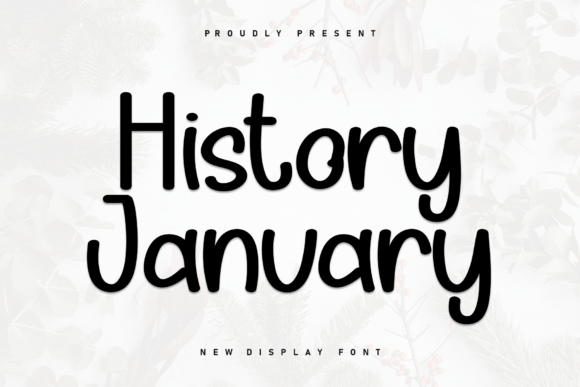
I still remember the moment I opened my design software for a recent project, staring at a blank canvas that needed more than just structure—it needed soul. The client was launching a small, artisanal skincare line focused on organic ingredients and slow living, and standard corporate typefaces simply wouldn’t cut it. That is when I turned to History January, a charming handwritten font filled with a sense of heartfelt perfection. Its smooth strokes and organic lines evoke a relaxed atmosphere, making it perfect for a variety of design projects that require a human touch. As a designer who works extensively with Script Handwritten styles, I have learned that the right Fonts can transform a simple logo into a memorable brand identity.
Creating Warmth with History January in Logo Design
When I first typed out the brand name using History January, the immediate impact was one of approachability. In logo design, especially for lifestyle and wellness brands, the goal is often to lower the barrier between the business and the customer. This Script Handwritten typeface achieves this effortlessly. Unlike rigid geometric sans serifs, History January features irregularities that mimic natural handwriting, suggesting that there is a real person behind the product. I tested several variations, adjusting the tracking slightly to ensure the letters breathed well together without losing their connected flow. The result was a logo mark that felt personal and curated, rather than mass-produced. For designers seeking Fonts that convey trust and intimacy, this typeface serves as an excellent primary element for wordmarks.
Enhancing Packaging Design with Organic Script Handwritten Styles
Moving from the digital screen to physical mockups, I applied History January to the product labels. Packaging design is a tactile experience, and the typography must complement the material. Whether printed on kraft paper, textured cardstock, or minimalist white labels, the smooth strokes of this font maintained their elegance. I found that History January worked particularly well as a display font for product names, while I paired it with a clean, lightweight sans serif for the ingredient lists and regulatory text. This contrast created a clear visual hierarchy, guiding the consumer’s eye from the emotional appeal of the brand name to the practical information. Using Script Handwritten elements in packaging helps products stand out on crowded shelves, offering a boutique feel that resonates with modern consumers who value authenticity. Among the many Fonts available for commercial use, this one strikes a rare balance between artistic flair and legibility.
Building Cohesive Brand Identity with History January
A successful brand identity extends beyond the logo and packaging; it lives in every touchpoint. I integrated History January into the client’s social media graphics, website headers, and printed marketing materials. Consistency is key, and because this font has such a distinct personality, it became the anchor of the visual system. On Instagram, I used short quotes and promotional headlines in History January to create engaging posts that stopped the scroll. The relaxed atmosphere evoked by its organic lines aligned perfectly with the brand’s messaging about self-care and natural beauty. When designing web banners, I ensured the font size was large enough to preserve the details of the script, as intricate Script Handwritten types can sometimes lose clarity at smaller scales. By limiting its use to headlines and accent text, I maintained its impact without overwhelming the user interface. This strategic application of Fonts ensures that the brand feels cohesive across all platforms.
Pairing History January with Modern Typography for Balance
One of the most critical aspects of working with a expressive typeface like History January is knowing what to pair it with. A common mistake in design is pairing two complex fonts, which creates visual noise. Since History January is a detailed Script Handwritten font, it demands a neutral partner. I experimented with several modern typography styles, eventually settling on a geometric sans serif with open apertures. This combination allowed the warmth of the script to shine while providing a structural backbone for longer texts. In editorial design layouts, such as lookbooks or brochures, this pairing proved effective. The script font drew attention to section headers and pull quotes, while the sans serif handled body copy with ease. Understanding how to balance Fonts is essential for any graphic designer, and History January offers a versatile foundation for creating sophisticated typographic hierarchies.
Practical Tips for Using History January in Client Projects
Before finalizing any design asset, I always recommend testing the font in various contexts. For History January, this meant checking its performance on both light and dark backgrounds. The smooth strokes held up well against muted, earthy tones, which are popular in current branding trends. I also explored the included alternates and ligatures, if available, to add subtle variation to repeated words, preventing the design from looking too uniform. When preparing files for print, ensuring high-resolution vectors was crucial to maintain the crispness of the organic lines. For digital use, I verified that the web font formats loaded quickly and rendered correctly across different browsers. These practical steps ensure that the charm of Script Handwritten typography is preserved in the final output. Whether you are a freelancer, a creative studio, or a small business owner, investing time in proper font implementation pays off in professional polish. Choosing the right Fonts is not just about aesthetics; it is about functionality and brand perception.
In conclusion, integrating History January into this branding project transformed a standard brief into a compelling visual story. Its ability to evoke a relaxed, heartfelt atmosphere makes it an invaluable tool for designers working on projects that require a human connection. From logo design to packaging and digital media, this Script Handwritten typeface delivers consistent elegance. If you are looking to elevate your design assets with a font that combines artistic integrity with practical versatility, History January is a standout choice among contemporary Fonts.